


Metalworking
Metalworking is a set of technological processes for processing metal products, materials and blanks aimed at obtaining products with specified parameters and properties. Metalworking includes a variety of technologies and methods, such as laser cutting, bending, welding, milling, turning, and many others. They are used to create a wide variety of metal products - from small parts to large metal structures.
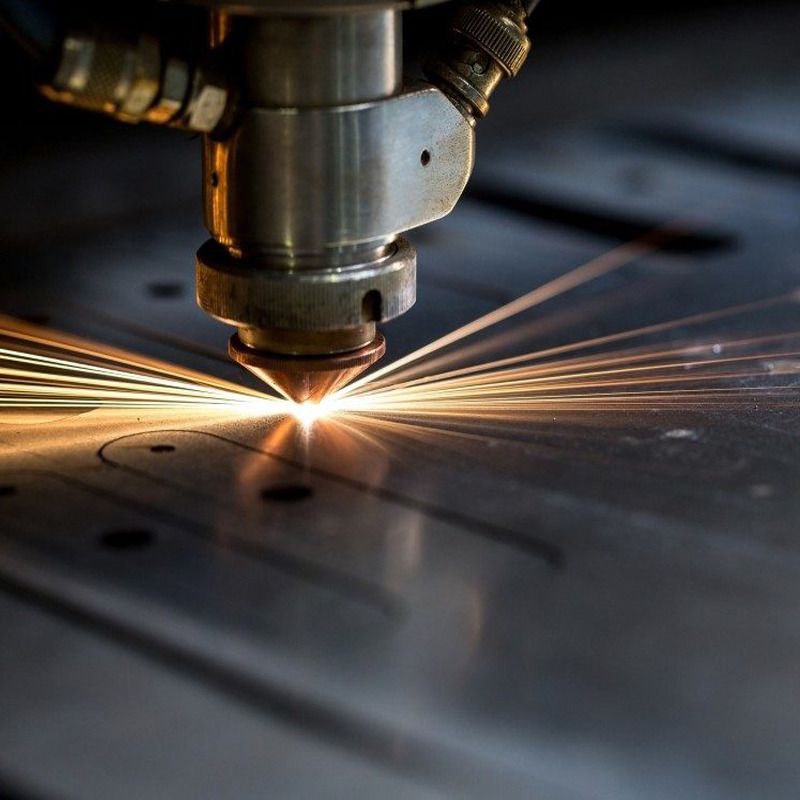
Laser cutting
One of the most popular methods of metalworking that allows you to make high-precision cuts along a line that can be controlled by a computer. Laser cutting is used to cut metal sheets, pipes, and profiles from various materials.
Metal bending
The process of bending a metal sheet using special equipment. Bending can be performed on mechanical or hydraulic presses. This method is widely used in the production of covers, cases and other products.
Welding
A technology for joining metal parts by melting or compression. There are many welding methods, such as arc welding, gas welding, laser welding, and others. Welding is used to create frames, structural steelwork, pipelines, and many other products.
Milling
A method of machining in which layers of metal are removed with a milling cutter to obtain a specific shape. Milling is used to create metal parts with high precision and complex geometries.
Turning and machining
A method of processing metal on a lathe. Turning is used to create metal parts with a circular cross-section, such as shafts, bushings, and other products. In the process of turning, a metal workpiece is mounted on a lathe spindle and rotates at a certain speed. A tool called a cutter moves along the axis of rotation of the workpiece and removes a layer of metal to form a product of the desired shape.
In addition, various types of surface treatment are widely used in metalworking, such as coating, painting, electroplating, etc. One of the main tasks of metalworking is to create products with certain characteristics, such as strength, wear resistance, corrosion resistance, etc. To achieve these characteristics, special materials are often used, such as stainless steel, titanium, aluminum, and others.In addition, in metalworking, it is important to take into account parameters such as accuracy, tightness, weight, and others that may be critical for a particular product.An important part of metalworking is also quality control. For this purpose, various inspection methods are used, such as visual inspection, tooling, X-ray inspection, ultrasonic inspection, and others.Today, metalworking is a key industry that is constantly developing and improving technologies. It plays an important role in the creation of a wide range of products used in various industries, such as automotive, engineering, energy, and others.